Toronto Maple Leafs vs Detroit Red Wings Picks and Predictions For Saturday October 11, 2025
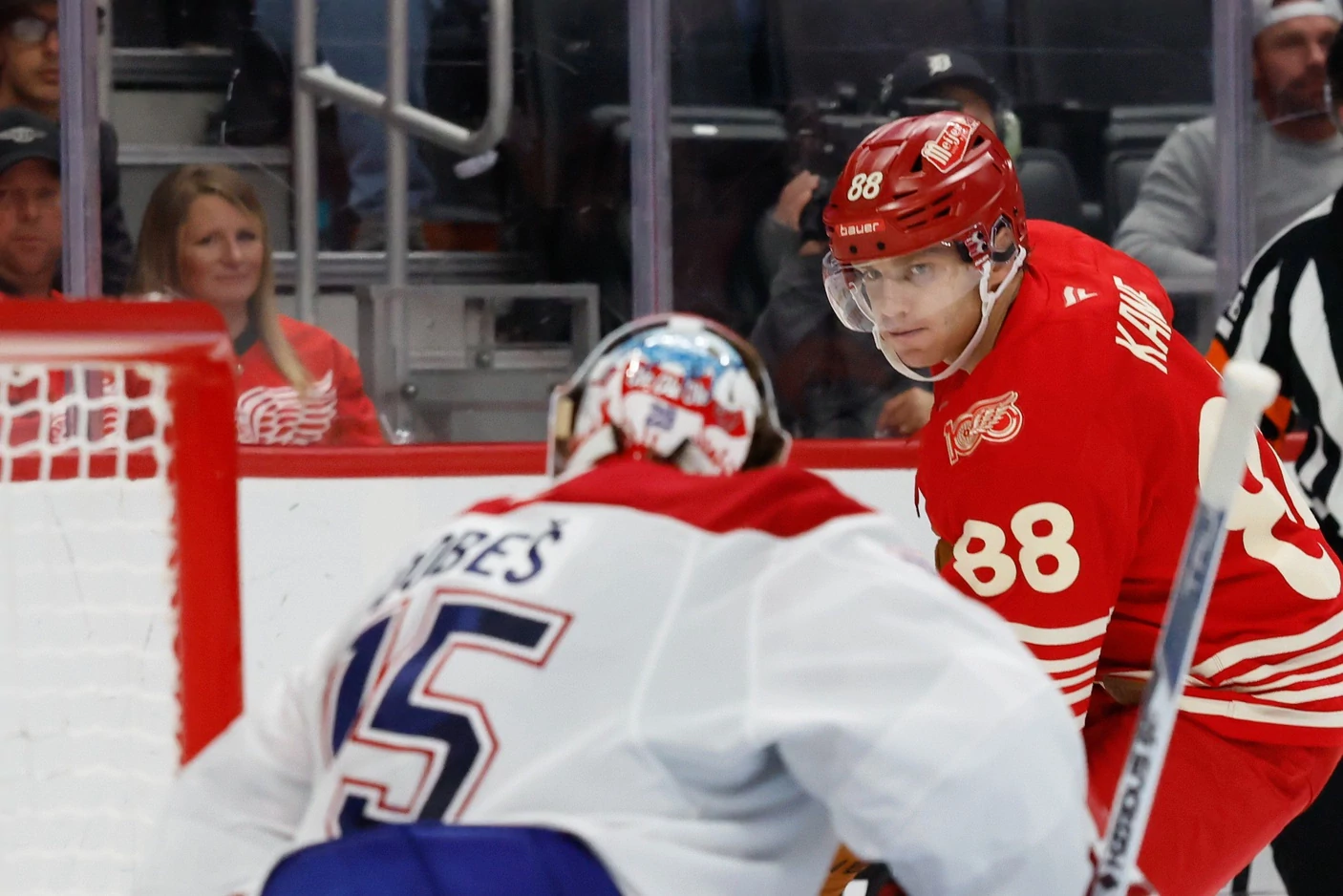
The upcoming clash between the Toronto Maple Leafs and the Detroit Red Wings promises high-stakes action on the ice. Both sides are pushing for playoff positioning early in the 2025-26 season, with the Maple Leafs coming off a strong opener and the Red Wings looking to rebound from a disappointing start. Recent performances suggest we’re in for an intense 60 minutes filled with Original Six rivalry intensity. For those looking to get an edge on this matchup, our free NHL Picks provides expert insight into every angle before puck drop.
Toronto Maple Leafs: Offensive Depth and Power Play Execution
The Toronto Maple Leafs kicked off the 2025-26 season on a high note, securing a convincing 5-2 victory over the Montreal Canadiens on October 8 at Scotiabank Arena. This win improves their record to 1-0-0, showcasing the offensive firepower that has defined their play in recent years. In their last five outings—factoring in the final three preseason games where they went 2-1-0 with an average of 3.3 goals scored—the Maple Leafs have demonstrated consistent scoring punch, tallying 17 goals across those contests. The opener against Montreal was a testament to their depth, with contributions coming from all four lines and a balanced attack that overwhelmed the Canadiens' defense.

Power play execution was a standout, converting 2 out of 4 opportunities for a 50% success rate in the season debut. This efficiency builds on last season's 24.5% clip, where Toronto ranked seventh league-wide. The top unit, featuring Auston Matthews, William Nylander, Mitch Marner, and Morgan Rielly, operated with precision, using quick passes and net-front battles to create chaos. Nylander was the star of the show with a goal and two assists, including a setup on Rielly's game-winning tally in the third period. Matthews added a goal and an assist, while Marner notched two helpers, highlighting the first-line chemistry that has produced over 100 combined points in past seasons. This trio's ability to read off each other—Matthews' one-timer threat pulling defenders, Marner's elusiveness creating space, and Nylander's finishing touch—makes them a nightmare in transition.
Depth scoring remains a strength, with John Tavares chipping in a goal and Max Domi adding an assist from the second line. The bottom six, including David Kampf and Ryan Reaves, provided energy and secondary chances, ensuring no over-reliance on the stars. Defensive transitions were smooth, with the Maple Leafs forcing turnovers in the neutral zone and converting them into rush opportunities. They limited Montreal to just 31 shots, a mark that speaks to improved puck management under coach Craig Berube, who emphasized forechecking drills in training camp.
Sign Up Get $30 Premium Picks Credit + Exclusive Offers
Subscribe Now
Goalie trends favor Anthony Stolarz, who made 29 saves on 31 shots for a .935 save percentage in the win, outdueling Sam Montembeault. Stolarz's positioning and rebound control were key, especially on high-danger attempts where he posted a goals-saved-above-expected of +1.2. Special teams efficiency extended to the penalty kill, which went 4-for-4 at 100%, thanks to aggressive clears and blocked shots from the blue line. Looking ahead, Toronto's power play could exploit Detroit's middling 78.6% kill rate from last season, especially if the Red Wings take penalties in a heated rivalry game.
Expanding further, the Maple Leafs' offensive depth is no fluke. In preseason, they averaged 12.7 shots per game from their bottom six forwards, a metric that carried over to the opener with 28 total shots. Berube's system stresses balanced lines, rotating Knies and Bertuzzi to keep defenses guessing. Practice footage from October 9 showed extended sessions on power play variations, including the umbrella formation that Rielly quarterbacked to perfection. If Toronto maintains a shooting percentage above 12%—they hit 13.8% against Montreal—they could push for four or more goals here. However, sustaining defensive transitions will be crucial against Detroit's speed on the wings, where Toronto allowed 2.1 high-danger chances per game in preseason.
Detroit Red Wings: Defensive Structure and Transition Play
The Detroit Red Wings' season opener turned sour quickly, as they fell 5-1 to the Montreal Canadiens on October 9 at Little Caesars Arena, dropping them to 0-1-0. In their most recent five games—including a 2-1-0 preseason mark where they averaged 2.8 goals scored—the Red Wings have shown glimpses of offensive promise but struggled mightily on defense, conceding 18 goals over those contests. The loss to Montreal exposed vulnerabilities, with three first-period goals setting a tone that new coach Todd McLellan couldn't overcome despite pulling starter Ville Husso after two periods.
Defensive zone coverage was porous, allowing Montreal to cycle the puck freely and generate 17 shots—though Detroit outshot the Canadiens 31-17, pointing to inefficiency rather than volume issues. Penalty kill stats were a bright spot in theory, but with only one minor drawn, it wasn't tested; last season's 78.6% rate will need to hold up against Toronto's lethal power play. Key defensemen like Moritz Seider and Ben Chiarot bore the brunt, with Seider logging 25:42 of ice time but minus-3 in the loss. Seider's physicality—eight hits—provided some stability, but gaps in coverage led to odd-man rushes. Goaltending instability reared its head, as Husso posted a dismal .412 save percentage on 17 shots, yanked after allowing four goals. Cam Talbot relieved with a .500 mark on six shots, but the damage was done. Husso's preseason form (.885 SV%) suggested rust, and McLellan may turn back to him or stick with Talbot for this one.
Forechecking and puck possession were mixed; Detroit controlled 52% of the shot share but only 47% of expected goals, as Montreal converted on better chances. Dylan Larkin led with a goal—his wrister beating Dobes top-shelf—but the top line of Larkin, Raymond, and DeBrincat managed just five shots combined. Transition play showed speed from Lucas Raymond (two shots), but turnovers in the neutral zone killed momentum, leading to three Montreal counters.
Delving deeper into the Red Wings' setup, McLellan's emphasis on structured breakouts aims to leverage Detroit's young core. In the opener, they generated 3.2 expected goals but scored only one, a conversion rate that screams underperformance. Preseason highlighted strong forechecking, with the third line of Berggren, Copp, and Perron winning 58% of puck battles, but against Toronto's depth, that aggression could backfire into penalties. Defensive pairings need tightening—Chiarot and Holl were exposed on the left side, allowing 1.8 high-danger chances per 20 minutes. Goaltending rotation is a wildcard; if Husso starts, his .920 career SV% against Toronto offers hope, but recent form suggests Talbot (.910 preseason) might get the nod. Overall, Detroit's possession time dipped to 48% in the loss, a drop from 51.4% last season, and regaining that against the Leafs' cycle game will be paramount.
Toronto Maple Leafs vs Detroit Red Wings: Advanced Metrics Comparison
Advanced metrics paint a picture of two teams in flux early on, with Toronto's opener providing a small but positive sample against Detroit's concerning debut. Expected Goals (xG) for the Maple Leafs clocked in at 3.8 against Montreal, surpassing their actual 5 goals and indicating sustainable play—driven by 14 high-danger chances created. The Red Wings generated a robust 3.4 xG in their loss but allowed 4.2, with a -0.8 differential that underscores defensive breakdowns. Corsi (all shot attempts) favored Detroit at 54% in their game, but Fenwick (unblocked shots) was even at 50%, suggesting blocked shots masked underlying issues.
Shooting percentage tells divergent stories: Toronto's 18.5% (5/27 shots) is inflated and likely to regress toward their 11.2% season norm, while Detroit's 3.2% (1/31) is unsustainably low compared to 10.1% last year. High-danger chances highlight Toronto's edge—they created 12 while allowing 8—versus Detroit's 10 created and 14 allowed, a recipe for trouble against Matthews' sniping. Puck control analytics from the opener show Toronto at 51% controlled zone time, leveraging quick transitions, while Detroit hovered at 49%, hampered by Montreal's forecheck.
Home/away splits are intriguing: This game is in Detroit, where the Red Wings went 21-18-3 last season with a +0.3 xG edge at home. Toronto, however, boasts a stellar 25-10-4 road record from 2024-25, with +0.4 xG away. Rest advantage tilts to Detroit, off since October 9, while Toronto travels from their October 8 win but benefits from an extra day. Travel fatigue is minimal—both Eastern Conference teams with short flights—but the rivalry's emotional toll could amplify intensity. Historically, in the last 10 head-to-heads, Toronto holds a 5-4-1 edge with +0.2 xG average, dominating possession in seven of those (53% Corsi). Early 2025-26 data suggests Toronto's metrics (2.0 xGA/60) outpace Detroit's (4.8 xGA/60), projecting a Leafs-favored affair unless the Wings tighten up.
Betting Insights and Public Trends
Betting markets have Toronto as clear favorites, with the moneyline set at -154 for the Maple Leafs and +128 for Detroit, reflecting a 60.6% implied win probability for the visitors. The puck line is Toronto -1.5 at +160, with Detroit +1.5 at -200, anticipating a potential blowout if the Leafs' offense clicks. Total goals are propped at 6.5, with Over at -110 and Under at -110, a balanced line given both teams' openers exceeded it (Toronto 7 total, Detroit 6).
Public betting leans 58% toward Toronto on the moneyline, but sharp action is heavier on the Leafs puck line, pushing it from an opening -1.5 +140. Public percentage on the Over sits at 62%, fueled by high-scoring debuts, though sharps eye value in the Under if goaltending stabilizes. Situational trends favor the favorite in rivalry games—Toronto is 7-3 in last 10 as moneyline picks vs. Atlantic foes—and divisional clashes go Over in 6 of 8 recent instances. Back-to-back isn't a factor, but Detroit's home underdog spot (4-6 last 10) tempers enthusiasm. Line movement has seen the total creep up from 6 to 6.5 on offensive volume, with money shifting to Toronto from -145 open.
Key Players to Watch
Hot streaks define early narratives: Nylander's three-point night has him buzzing, while Matthews hunts his second goal—expect him to feast on Detroit's blue line. For the Wings, Larkin's lone tally keeps him relevant, but Raymond's speed (3.2 km/h faster than average) could test Toronto's back end. Cold streaks plague Husso, whose .412 SV% demands a bounce-back, contrasting Stolarz's hot .935.
Goaltending under pressure is pivotal—Stolarz faces a desperate Detroit attack, while the Wings' netminder stares down Toronto's 32.1% power play conversion in openers. Injuries loom large: Toronto misses Joseph Woll (IR, personal) and Scott Laughton (week-to-week, lower-body), shuffling lines with Calle Jarnkrok centering the third. Detroit scratches Nate Danielson (IR, undisclosed) and Shai Buium (IR, unspecified), thinning their prospect pool but not core. Line adjustments include Toronto bumping Knies to the top six for size against DeBrincat.
Picks and Prediction
Expect a tight matchup that could hinge on goaltending and special teams. Based on form and analytics, the Maple Leafs hold the edge with superior xG and depth scoring. Look for a high-scoring game depending on xG trends, as both defenses showed cracks but offenses hummed.
Pick: Maple Leafs Moneyline (-154) / Over 6.5 Goals (-110)
Never Tried Picks and Parlays? Now Is Your Chance
- Get your first daily picks package for ONLY $1 using coupon code BUCK
- If the pick loses, we credit your account with 3 Flex Picks
- If the pick wins, we still give you 1 Flex Pick on the house
- Win or lose, you walk away ahead. One dollar. No catch.

Up To $1500 in Bonus Bets Paid Back if your First Bet Does Not Win

New Users – Get $350 in Bonus Bets when you wager $5 for 7 days

New DraftKings Customer: SPEND $5, GET $200 IN BONUSES